Gingivitis can be fully reversed, but periodontitis can only be controlled, which makes the stage at which gum disease is caught the biggest factor in how much healthy gum and bone you keep.
Roman Dental treats both in West Houston, TX, with scaling and root planing, Arestin antibiotic therapy, and gum grafting, and offers sedation for any visit.








We are in-network with most PPO insurance plans, and gum disease treatment is often covered in part when it is considered medically necessary.
After scaling and root planing, we place Arestin microspheres directly into the gum pockets, where they release antibiotics over about 14 days. This treats the infection at its source instead of relying on a pill or mouth rinse.
Nitrous oxide, oral sedation, and IV sedation are all sedation options for gum disease treatment, so a deep cleaning does not have to be something you put off.
EXCELLENT Based on 508 reviews
 Posted on Google

 Alexander GutierrezDoc is Rock star. Cool Calm Confident Quick. I was so happy he made my front chipped tooth PERFECT. Thank You!Posted on Google
 Sherri Ann CarrollI love this dentists office. The ladies working in the office are very curious and so very very nice. The doc is a hoot and he gives it to you straight. I feel comfortable and at ease with them.Posted on Google
 Nazila HensleyExcellent dental care. Very attentive staff. Amazing dentist.Posted on Google
 Danny FI recently made the decision to switch dental offices to Roman Dental and I do not regret it. Rebecca the hygienist who treated me was great, very thorough and friendly. The doctor took his time to do his exam and explain everything.Posted on Google
 Herbert EilenderI have been a patient of Dr. Kotlarek for many years and I am always very satisfied with the procedures. Danielle EilenderPosted on Google
 Cyndi SaenzThis is the best dental clinic. The doctor and his staff are amazing and professional. I would not go anywhere else!! I have been a patient for many years!Posted on Google
 Cheryl OceaniLove the entire staff, kind gentle and always a pleasure visiting them. They even watched my son while I was being worked on. Thank you all

Gum disease, also called periodontal disease or pyorrhea, is a bacterial infection of the tooth roots and the tissues around them. Left untreated, the infection dissolves the bone that supports your teeth, and affected teeth may eventually become hopelessly loose.
It is also common: about 4 in 10 U.S. adults aged 30 and older have periodontitis, which, along with cavities, is one of the leading causes of tooth loss. Fortunately, like most dental conditions, gum disease can be stopped and tooth loss prevented when it is recognized and treated early.
Gingivitis is the earliest stage of gum disease, when plaque bacteria irritate the gums and make them red, swollen, and likely to bleed. Gingivitis is reversible: with a professional cleaning and consistent home care, the gums can return to full health.
Periodontitis is the advanced stage, when the infection spreads below the gumline, forms pockets between the teeth and gums, and starts to break down the bone underneath. It cannot be cured, but it can be controlled, which is why treatment focuses on stopping the disease from progressing and protecting the teeth you still have.
The signs you may need gum disease treatment start in the gums and move to the teeth as the infection spreads. Gum disease starts with swollen, red, and bleeding gums, and the signs below tend to become more noticeable once the infection reaches the bone.

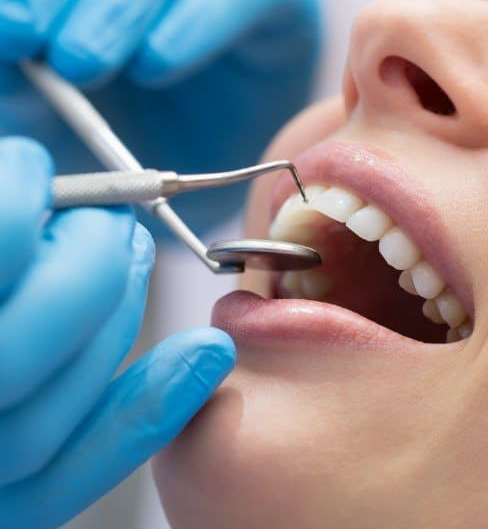
The benefits of early gum disease treatment start with keeping the bacteria that cause gum disease from penetrating into the tooth-root surfaces. It is often said that gum disease can only be treated but not cured. This is true in part because bacteria can lodge within the porous root surface, at which time treatment can slow (but not eliminate) the progress of the disease.
With early treatment, you’ll have a higher chance of preserving your natural smile and avoiding permanent oral damage as a result of gum disease.
Beyond slowing the disease, early treatment pays off in four practical ways:
Roman Dental evaluates and treats gum disease in West Houston, with Arestin antibiotic therapy and sedation options for a more comfortable visit.
Scaling and root planing is a two-step deep cleaning completed in one or two visits, depending on the severity of your condition. First, we remove plaque and tartar from the surface of your teeth using Airflow therapy, reaching down into the gum pockets. Then, we smooth the tooth roots so your gums can reattach and stay protected from harmful bacteria.
Gum grafting may be needed when gum disease has caused recession, where the gums pull back and expose the tooth roots to harmful bacteria. Dr. Roman removes the damaged tissue and replaces it with soft tissue from the palate, protecting the roots to help prevent tooth loss.
Follow-up care keeps gum disease from coming back through professional cleanings and daily home care. A regular cleaning mainly removes buildup above the gumline, while scaling and root planing reaches below it, so patients treated for gum disease often need more frequent checkups and cleanings than the usual two a year. Brushing twice a day and cleaning between your teeth daily keeps plaque from rebuilding.
A gum disease treatment visit at Roman Dental follows five steps, from the first exam to a plan for keeping your gums healthy.

No, scaling and root planing does not usually hurt, because it is done with local anesthesia and most patients feel pressure rather than pain. Nitrous oxide, oral sedation, and IV sedation are also available for patients who feel anxious. Gums are usually tender for a few days afterward, and the main soreness typically fades within five to seven days.
Gum disease treatment with scaling and root planing costs $242 per quadrant of the mouth on average nationally, with a range of $185 to $444 per quadrant. Dental insurance usually covers about 50% because the treatment is considered medically necessary. The final cost depends on how many quadrants need treatment, whether X-rays or antibiotics are added, and your insurance plan.
14535 Memorial Dr, Houston, TX 77079
Monday - Thursday: 8am - 5pm
Friday: 8am - 2pm