
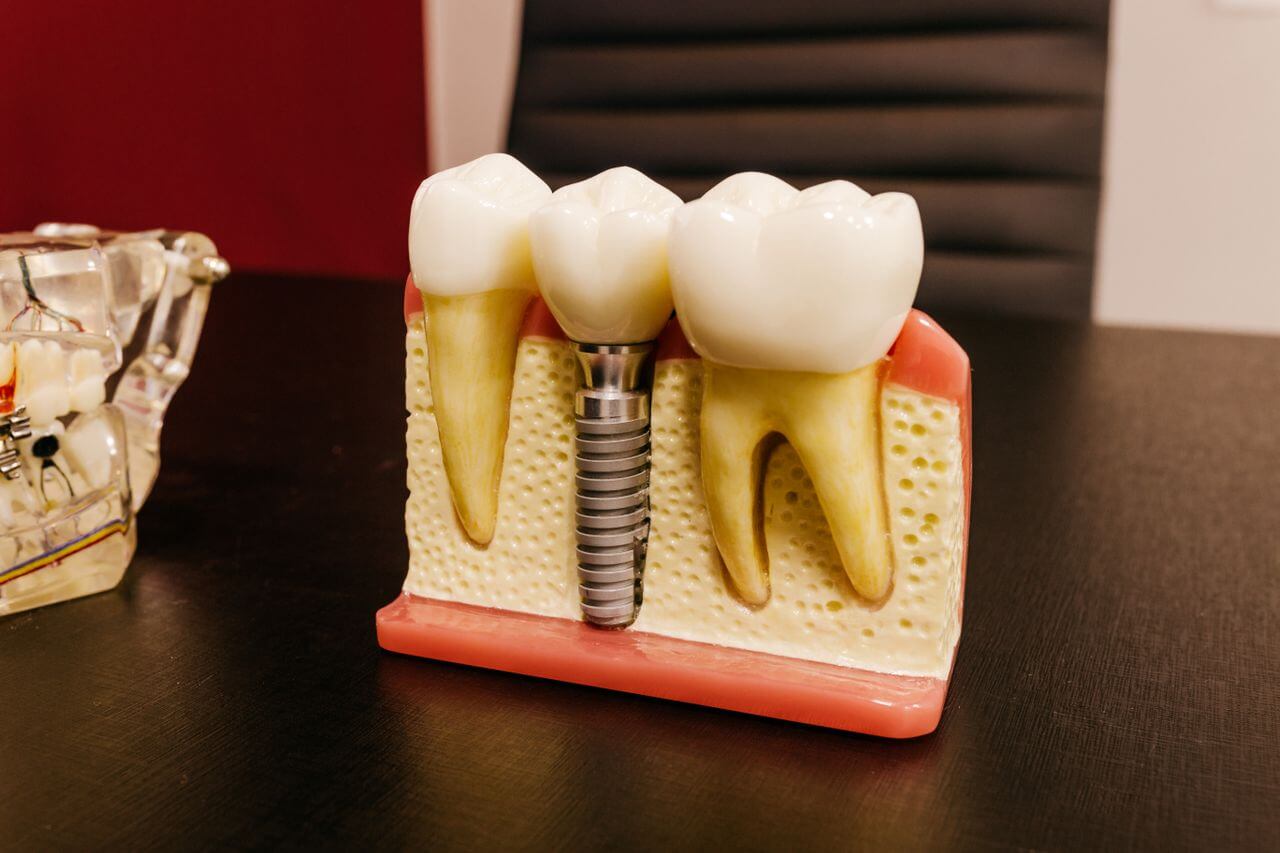
A dental implant is a small titanium post placed into your jawbone that acts as a replacement root for a missing tooth. Once it heals, a custom-made crown is attached on top, giving you a restoration that looks, feels, and functions like a natural tooth. It is the closest thing modern dentistry has to replacing a tooth from the root up.
Losing a tooth can feel disorienting, whether it happened from an accident, decay, or an extraction. What many people do not realize is that the problem does not stop with the gap. Studies show that the jawbone loses roughly half its width in the first year after a tooth is lost. This bone loss can change the shape of your face over time and compromise the health of surrounding teeth.
This guide walks you through exactly how dental implants work, who is a good candidate, what the process looks like here in West Houston, and what questions to ask before moving forward.
Key Takeaways:
- Implants replace both the root and the crown of the tooth, not just the visible part.
- Dental implants are the only restorative option that actively prevents jawbone loss.
- With proper care, implants have a survival rate of around 95% over a decade.
- While the upfront cost and timeline are higher, implants are designed to last 20 or more years.
How Does a Dental Implant Work?
A dental implant works by fusing directly to your jawbone through a natural process called osseointegration. This means your bone physically grows around the implant, locking it permanently in place.
This mechanism is what separates implants from other tooth replacement options. A bridge sits on top of neighboring teeth, and dentures rest on your gums, but an implant becomes part of your jaw.
The implant system consists of three parts that work together:
- The Implant Post: A small titanium screw that goes into the jawbone. Titanium is highly biocompatible, allowing the bone to bond to it naturally.
- The Abutment: A connector piece that sits just above the gum line. It links the post to the final crown and is placed once the implant has fully healed into the bone.
- The Crown: The visible part of the tooth. It is custom-made to match the exact color, shape, and size of your natural teeth.
Together, these components create a secure replacement that does not slip, does not require shaving down healthy neighboring teeth, and does not need special cleaning beyond normal brushing and flossing.
Who Is a Good Candidate for Dental Implants?
Most healthy adults with one or more missing teeth are excellent candidates for dental implants. The primary factors we evaluate are jawbone density, overall gum health, and systemic conditions that might affect healing.
Here is a breakdown of what affects your candidacy:
| Factor | What We Look For | Why It Matters |
| Jawbone density | Enough bone volume to anchor the post | Low volume may require a preliminary bone graft |
| Gum health | No active periodontal (gum) disease | Active infection raises the risk of implant failure |
| Overall health | Controlled chronic conditions | Conditions like uncontrolled diabetes slow down healing |
| Smoking | Non-smoker, or willing to pause during healing | Tobacco use significantly reduces implant success rates |
| Age | An adult with a fully developed jaw | Implants cannot be placed while the jaw is still growing |
If you have been told in the past that you do not have enough bone for an implant, you may still have options. A bone graft can rebuild volume over time. During your consultation, I will discuss whether that makes sense for your specific anatomy.
What the Implant Process Looks Like
The dental implant timeline spans several months, but most of that time involves your body healing naturally between appointments. The actual number of office visits is smaller than most people expect.
Here is how the stages work at Roman Dental:
1. Initial Consultation and 3D Imaging
We start with a thorough exam, including digital X-rays and a 3D cone beam scan. I rely on this 3D scan to digitally map your bone structure and plan the exact angle and depth of your implant before your surgery even begins.
2. Implant Placement
The implant post is placed during a straightforward, outpatient procedure in our office. We use local anesthesia to ensure you are entirely comfortable. Most patients are surprised by how manageable the experience is, noting that mild soreness in the following days is easily handled with over-the-counter pain relievers.
3. Healing and Osseointegration
This phase takes roughly three to six months. You will not need frequent appointments during this time; your body is simply doing the work of growing bone tissue around the titanium post. If the implant is in a highly visible area, I can often place a temporary tooth so you never have to walk around with a gap.
4. Placing the Crown
Once the implant is fully integrated and stable, we attach the abutment and secure your permanent, custom-matched crown. At this point, the process is complete, and your new tooth is ready for normal biting and chewing.
Dental Implants Compared to Other Options
Implants perform more like natural teeth than bridges or dentures, though they require a longer upfront process. The right choice depends on your clinical needs, budget, and lifestyle.
| Feature | Dental Implant | Fixed Bridge | Removable Denture |
| Lifespan | 20+ years (with proper care) | 10 to 15 years | 5 to 10 years |
| Bone preservation | Yes | No | No |
| Affects adjacent teeth | No | Yes (requires shaving enamel) | No |
| Natural feel | Yes | Mostly | No |
| Removable | No | No | Yes |
Caring for Your Implant Long-Term
Dental implants are simple to maintain because you treat them exactly like natural teeth. Brush twice a day, floss daily, and keep up with your regular professional cleanings.
The primary threat to an implant’s longevity is peri-implantitis, an infection of the surrounding gum tissue similar to periodontal disease. The American Academy of Periodontology notes that daily plaque control and consistent dental checkups are the best ways to prevent it. Staying consistent with your visits to Roman Dental protects your investment.
Schedule Your Consultation with Dr. Kotlarek
If you are in the West Houston area, including the Energy Corridor, Katy, Memorial, or Cinco Ranch, and are considering getting dental implants, I am here to help.
Call Roman Dental at (281) 920-4200 or book online to schedule a consultation. We will review your 3D imaging together, discuss your clinical options honestly, and ensure you leave with a clear, personalized treatment plan, not a sales pitch.
Frequently Asked Questions
What is a dental implant and how is it different from a crown?
A dental implant is a complete tooth replacement system that includes an artificial root placed in the jawbone. A crown, on the other hand, is just the visible “cap” that sits on top of either an existing natural root or an implant. If you are missing a tooth entirely, you need the implant post to support the new crown and preserve the surrounding jawbone.
How long does the dental implant process take?
The full process typically takes four to eight months from the initial placement to the attachment of the final crown. The exact timeline depends on how quickly your body osseointegrates (fuses bone to the implant) and whether you require any preliminary work, like a bone graft. Most of this timeframe is passive healing, not active time spent in the dental chair.
Does getting a dental implant hurt?
Because the procedure is performed under local anesthesia, you should not feel any pain while the implant is being placed. In the days following the procedure, mild swelling and soreness are normal but are generally well-managed with over-the-counter pain medication. Many patients report that the recovery was much easier than they anticipated.
How much does a dental implant cost in Houston, TX?
The cost of an implant varies based on the number of teeth being replaced, the type of crown used, and whether bone grafting is necessary. At Roman Dental, we provide a transparent, itemized breakdown of costs during your consultation and will walk you through available financing options.
Can dental implants fail?
While dental implants have a highly successful track record, failures can occur. Long-term clinical studies show survival rates of around 95% over 10 years. The most common causes of failure are smoking, uncontrolled diabetes, and poor oral hygiene.
Am I too old to get a dental implant?
There is no upper age limit for dental implants. Many patients in their 60s, 70s, and 80s are excellent candidates. Your overall health, bone density, and gum tissue health matter much more than your chronological age.
Does dental insurance cover implants in Texas?
Coverage varies significantly depending on your specific provider and plan. Some insurance plans cover a portion of the implant procedure under major restorative benefits, while others strictly classify them as cosmetic or exclude them entirely. Our office staff will help you verify your benefits and maximize your coverage.