
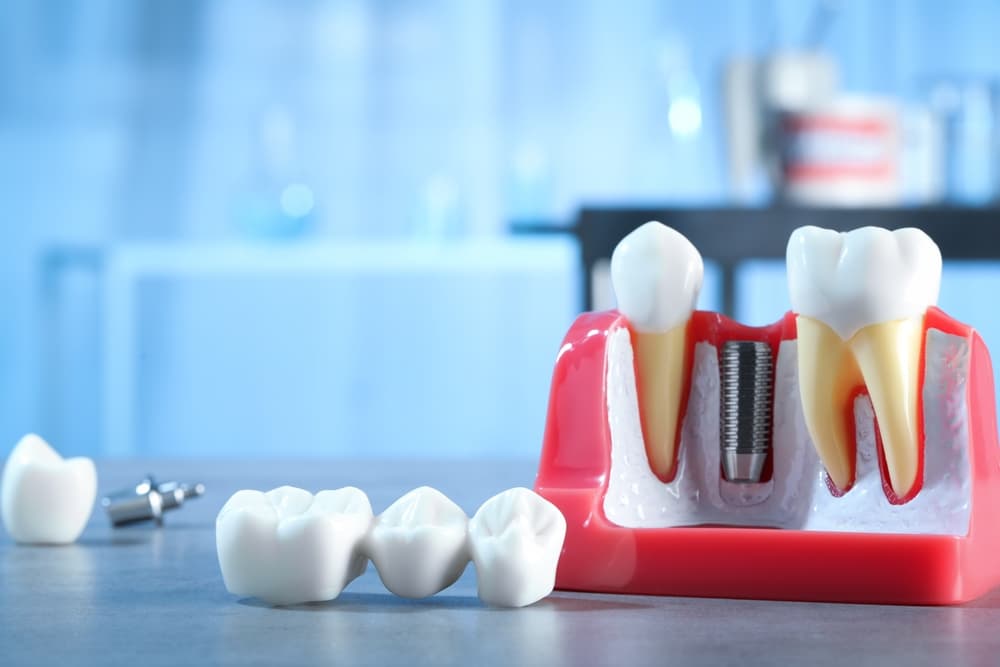
Replacing a missing tooth here in West Houston usually comes down to three options: a dental implant, a bridge, or a denture. The right choice depends on your bone health, how many teeth you are missing, your budget, and how long you want the fix to last. There is no single answer that works for everyone, but once you look at your full picture, there is almost always a clear best fit.
A missing tooth affects much more than your smile. Research on extraction sites shows that major bone changes in the jaw happen within the first year after a tooth is lost. That bone loss reshapes your facial structure and makes future replacement harder over time. The sooner you understand your tooth replacement options, the better your outcome tends to be.
I walk patients through this decision every week at my practice. This guide covers exactly what you need to know about each option so you can come into our consultation fully informed.
Key Takeaways
- Dental Implants are the longest-lasting option (20+ years) and the only solution that actively prevents jawbone loss, but they require surgery and a higher upfront investment.
- Dental Bridges are a faster, moderate-cost solution for replacing one to three teeth without surgery, but they require filing down the healthy neighboring teeth.
- Dentures are the most affordable and fastest way to replace multiple teeth or a full arch, but they must be removed daily and will need refitting as your jawbone changes over time.
- Bone health dictates your options. Significant bone loss may require a bone graft before an implant can be placed.
What Is a Dental Implant, and Who Is It a Good Fit For?
A dental implant is a titanium post placed into your jawbone that acts as a permanent root for a replacement tooth. It is the closest thing modern dentistry has to a natural tooth in both function and how it preserves your bone over time.
The process runs several months from start to finish. The post is placed first and left to fuse with the bone through a natural process called osseointegration. Once healed, a custom crown is attached on top. The result looks and functions like a real tooth.
A systematic review of more than 7,700 implants followed for an average of 13 years found a cumulative survival rate around 95%, making it one of the best-documented outcomes in restorative dentistry.
Implants tend to work best if you have:
- Adequate jawbone density: The implant needs solid bone to anchor into. If bone loss has already occurred, a bone graft may come first.
- Good overall health: Conditions like uncontrolled diabetes or heavy smoking can slow healing and lower success rates.
- One or a few missing teeth: This is especially true when the surrounding teeth are healthy and do not need dental work.
- A long-term mindset: The upfront cost is higher, but an implant can last a lifetime with proper care.
In my 26 years practicing in West Houston’s Energy Corridor, I have seen plenty of patients hesitate at the implant cost. They often come back after realizing they would need to replace a bridge or refit dentures more than once over that same time span. That long-term comparison is usually what settles the decision.
What Is a Dental Bridge, and When Does It Make Sense?
A dental bridge fills the gap left by a missing tooth by anchoring an artificial tooth to the two natural teeth on either side of the space. Those neighboring teeth are filed down and capped with crowns to hold the bridge securely in place.
Bridges are faster and less expensive than implants. Most patients finish the process in two or three appointments over a few weeks with no surgery required. This makes a bridge a better option if you cannot undergo implant placement for health reasons or do not have enough bone density. Long-term outcome data on tooth-supported bridges holds up well over 10 years, though a bridge does not stop the bone loss under the missing tooth because there is no root to stimulate the jaw.
A bridge tends to be the right call when:
- Neighboring teeth need crowns: A bridge can solve both problems in one treatment.
- Surgery is not an option: Medical conditions or medications that affect healing might rule out implants.
- Budget is a near-term priority: The lower initial cost makes it more accessible today.
When a patient of mine already needs crowns on the teeth next to the gap, I will usually walk them through a bridge first. It solves two problems in one visit instead of layering an implant on top of restorative work they already need.
What Are Dentures, and Who Should Consider Them?
Dentures are removable appliances that replace multiple missing teeth or an entire arch in the case of full dentures. They rest directly on the gums and come out for cleaning and sleeping. Partial dentures replace a few teeth and clip onto your remaining natural teeth for stability.
Dentures are the most affordable option upfront and can be made relatively quickly. If you have lost most or all of your teeth, dentures restore your ability to chew, speak clearly, and support the facial structure that would otherwise collapse. The practical trade-off is that the jawbone underneath keeps changing shape for as long as you wear them. Because of this natural bone loss, dentures require periodic relining or replacement.
Dentures typically fit best if you:
- Are missing most or all of your teeth: Implants or bridges alone may not be practical.
- Have significant bone loss: This rules out standard implants and leaves too many gaps for a bridge.
- Need a faster, lower-cost solution: They work well while you sort out a longer-term financial plan.
For patients who need dentures but want more stability, I often discuss implant-supported dentures. These anchor the appliance to a small number of implants to completely cut down on slipping.
Implant vs. Bridge vs. Denture: A Side-by-Side Look
Here is how the three options stack up on the factors that matter most. Treat this as a starting reference. Your specific oral health dictates what applies to you, which is exactly what we check during a consultation.
| Factor | Dental Implant | Bridge | Denture |
| Lifespan | 20+ years, often a lifetime | Roughly a decade or more | Several years before refit |
| Prevents bone loss | Yes | No | No |
| Surgery required | Yes | No | No |
| Affects neighboring teeth | No | Yes | Partial dentures clip to remaining teeth |
| Removable | No | No | Yes |
| Upfront cost | Highest | Moderate | Lowest |
| Best for | One or a few missing teeth with good bone | One to three missing teeth in a row | Multiple or full-arch tooth loss |
Note: Cost ranges vary based on how many teeth are involved, bone grafting needs, and your specific treatment plan. Always get a personalized estimate from your dentist.
How Do I Choose the Right Option for My Situation?
The best tooth replacement for you is the one that fits your bone health, your overall medical picture, how many teeth you are replacing, and what you want the next 10 to 20 years to look like. It helps to think past the initial sticker price and consider how often you are willing to deal with adjustments, refits, or dietary restrictions.
If you are in West Houston and working through this decision, here is the exact advice I give my own patients:
- Start with a bone evaluation: Your bone density determines whether an implant is even possible and shapes every other choice from there.
- Look at the neighboring teeth: If the teeth next to your gap are already compromised, a bridge may solve two problems instead of one.
- Think in decades, not months: A cheaper bridge today can cost more over 20 years than an implant placed once and cared for properly.
- Ask about implant-supported dentures: If you need dentures but want more stability and slower bone loss, this is a great hybrid solution.
Schedule a Consultation at Roman Dental
If you are weighing these options and want an answer based on your actual mouth rather than a general guide, call Roman Dental in West Houston at (281) 920-4200 or book online to schedule a consultation. I evaluate your bone health, remaining teeth, and goals in one visit so you leave with a clear recommendation instead of more open questions.
Frequently Asked Questions
Is a dental implant better than a bridge for a single missing tooth?
A dental implant is generally the preferred option for a single missing tooth when your bone health supports it, since it doesn’t require altering the neighboring teeth and it preserves the jawbone underneath. A bridge can be the better fit if the teeth on either side already need crowns or if surgery isn’t recommended for your health situation.
How long do dental implants last compared to bridges and dentures?
Dental implants can last 20 years or more, often a lifetime with proper care, with documented survival rates around 95% over an average 13-year follow-up. Bridges typically hold up well past a decade. Dentures often need relining or replacement every several years as the jawbone changes shape. That longevity is one reason many of my West Houston patients find implants more cost-effective over time despite the higher upfront cost.
Are dental implants covered by insurance in Texas?
Coverage genuinely varies by plan. Many plans cover part of the crown placed on top of the implant but not the implant post itself, and some cover bridges or dentures at a higher rate. I always tell patients to call their insurer directly and ask specifically what tooth-replacement benefits their plan includes before deciding.
What happens if I don’t replace a missing tooth?
Leaving a missing tooth unreplaced lets the jawbone in that area shrink over time, since there’s no root to stimulate it. Neighboring teeth can also shift toward the gap, which changes your bite and can lead to more dental problems. Replacing a missing tooth as soon as you’re ready is the best way to avoid these longer-term issues.
Can I get a dental implant if I already have bone loss?
Getting an implant with existing bone loss is possible in many cases, but it may require a bone graft first, which adds several months of healing time and additional cost. At Roman Dental, I evaluate bone density as part of every implant consultation to determine whether grafting is needed before moving forward.
Are dentures a permanent solution for missing teeth?
Dentures aren’t permanent the way implants are. They’re removable and need to be refitted or replaced as your jawbone changes shape over the years. That said, dentures are a solid long-term solution if you’re missing most or all of your teeth, and implant-supported dentures are an option if you want more stability alongside broader coverage.
How do I know which tooth replacement option is right for me?
Knowing which option is right for you takes a full evaluation of your bone density, overall health, the number and location of missing teeth, and your goals for function and appearance. A guide like this one gives you a useful starting point, but a consultation with a dentist who can examine your specific mouth is what actually settles it. That’s the exact conversation I have with patients at Roman Dental in West Houston every week.