
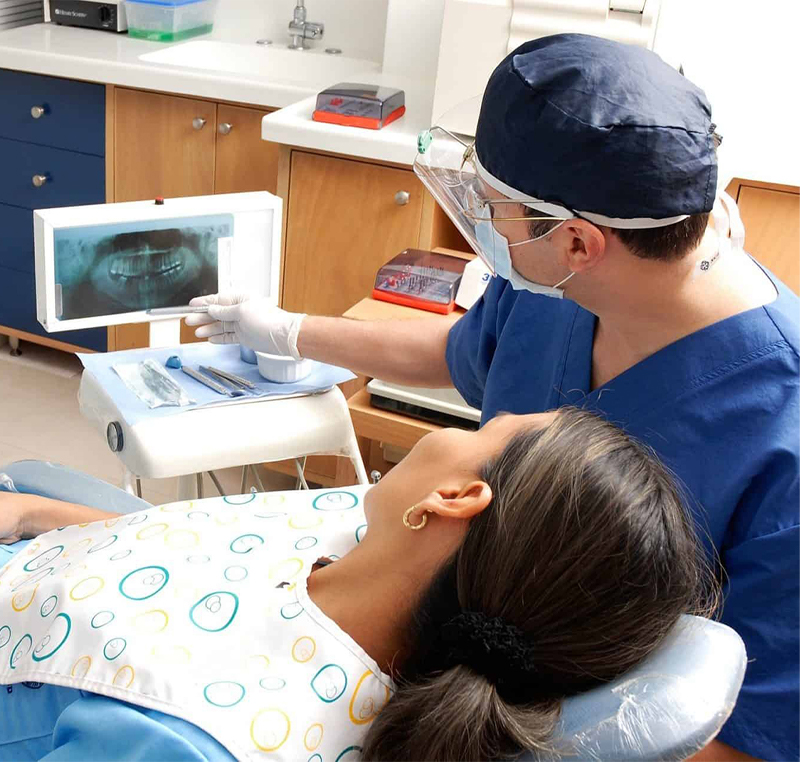
Finding the right dental implant dentist in West Houston means looking for dedicated implant training, advanced 3D imaging, and a provider who walks you through the full treatment plan before scheduling any procedures. This combination matters significantly. Dental implants succeed long-term about 95% of the time, and the provider’s skill and case selection are the primary reasons the remaining percentage falls short.
I am Dr. Roman Kotlarek, and I have placed and restored implants at Roman Dental in the Energy Corridor since 1999. A poorly placed implant can fail, cause bone loss, or require costly correction. Choosing carefully from the start protects both your health and your financial investment.
This guide covers what to look for in an implant dentist, the questions you should ask, and the warning signs to avoid, whether you live in Katy, Memorial, or right here in the Energy Corridor.
Key Takeaways
- A general dental license allows a dentist to place implants, but predictable success requires hundreds of hours of dedicated, post-graduate surgical training.
- Safe and accurate implant placement requires a 3D cone beam CT scan to evaluate bone density and nerve placement.
- Trustworthy providers will offer a clear, itemized breakdown of costs and a written treatment plan before asking you to commit.
- Choosing a dentist who can expertly handle both the surgical placement and the final restoration simplifies your treatment and prevents miscommunication between offices.
Does a Dental Implant Dentist Need Special Training?
A dental implant dentist needs training that goes well beyond a general dental license. In Texas, a general dentist can legally place implants, but doing it well takes surgical precision, 3D imaging interpretation, bone assessment, and restoration planning that dental school only introduces. That’s why serious implant providers log hundreds of hours of hands-on implant courses, continuing education, and mentorship.
When evaluating a provider, look for the following:
- Where and how they received their specialized training.
- The total number of implants they have successfully placed.
- Whether they handle the full procedure in-house or refer parts of the process to other clinics.
I’m a Fellow of the International Congress of Oral Implantologists (FICOI), and at Roman Dental here in West Houston, I both place and restore implants under one roof, which keeps your care coordinated and cuts the back-and-forth of a split referral.
That coordination starts at your first visit, which is where you can size up a provider fastest.
What Should Happen at an Implant Consultation?
A comprehensive implant consultation should include a review of your medical history, 3D imaging, an assessment of your bone and gum health, and a written treatment plan provided before you are asked to commit. What a consultation leaves out is just as revealing as what it includes.
Pay close attention to these elements during your visit:
- 3D imaging: A cone beam CT scan shows your bone structure, nerve location, and sinus anatomy in detail. If a practice plans implants from a flat 2D X-ray alone, ask why.
- Bone evaluation: An implant needs enough bone to support it. Ask whether you have adequate bone and, if not, what grafting options exist.
- Transparent pricing: Expect an itemized breakdown covering the implant post, abutment, crown, and any prep work. Vague estimates are a warning sign.
- A realistic timeline: Most cases run several months from placement to the final crown. A provider who rushes this or promises an unusually fast finish deserves a follow-up question.
- Your comfort with the provider: Implant care spans multiple visits. If you don’t feel heard at the consult, that rarely improves later.
Do You Need an Oral Surgeon or a Dental Implant Dentist?
For most patients in West Houston, a well-trained dental implant dentist can handle the entire process without a referral to an oral surgeon.
Oral surgeons specialize in the surgical side of jaw and facial procedures. They are the right choice for highly complex cases involving significant bone loss, full-arch reconstruction, or severe medical conditions that complicate healing. For a single-tooth implant or several implants in an otherwise healthy patient, a dentist with dedicated implant training is typically the ideal fit.
The simpler your case, the less you need a separate surgical specialist. To understand how a practice handles this, simply ask: “Do you ever refer patients out for the surgical phase, and in what situations?” I place the large majority of my cases myself and maintain complete transparency about the specific, complex cases I refer to a specialist.
What Should I Ask Before Committing to an Implant Dentist?
Before you commit to a provider, arrive prepared with a few direct questions. The answers matter, but the provider’s delivery matters equally. A confident and transparent dentist welcomes these conversations.
Here are the most important questions to ask and the type of answers you should expect:
| Question | What a Good Answer Sounds Like |
| How many implants have you placed? | A specific number, or an honest “hundreds” with context about their training |
| Do you use 3D imaging for planning? | Yes, cone beam CT is standard in our process |
| What happens if an implant fails? | A clear warranty or re-treatment policy |
| Do you place and restore the implant in-house? | Yes, or a clear explanation of which phase involves a referral and why |
| What implant brands do you use? | A named, reputable manufacturer with a track record in the research |
| Can I see before-and-after cases like mine? | Yes, with patient permission |
I welcome every one of these questions at Roman Dental, because better-informed patients make clearer decisions and tend to have smoother treatment.
The same goes for what you can learn before you ever walk in, starting with online reviews.
How Do I Read Implant Dentist Reviews in West Houston?
To read implant dentist reviews in West Houston well, look past the star rating and read the detailed stories. The most useful reviews aren’t the glowing one-liners; they’re the ones that describe a specific experience, a problem that came up, and how the practice handled it. A provider with 200 reviews averaging 4.7 stars usually tells you more than one with 12 perfect 5.0s.
Look for patterns. When several patients mention clear communication, prompt follow-up after a procedure, or feeling comfortable asking questions, those are reliable signs of how a practice actually runs. Occasional critical reviews are normal. What matters is whether the practice responds professionally, because that same attitude carries into how it handles a real complication.
Reviews can also surface the warning signs worth taking seriously before you book.
What Are the Red Flags When Choosing an Implant Dentist?
The clearest warning signs when choosing a provider often appear repeatedly in the stories patients share after a negative experience.
Watch out for these specific red flags:
- Unusually low, “too good to be true” advertised prices.
- High-pressure sales tactics to schedule surgery the exact same day.
- Vague answers regarding the specific implant brands used or the dentist’s training history.
- Skipping medical fundamentals.
The American Dental Association notes that implants require a careful discussion with your dentist and a thorough medical evaluation, as conditions like diabetes or tobacco use affect your healing process. A provider who rushes you toward a decision without evaluating your holistic health requires a pause, regardless of their confidence.
Put together, these signals point back to the same three things that separate a great implant dentist from a risky one.
Choosing the Right Dental Implant Dentist in West Houston
Selecting the right dental implant dentist relies on three core factors: verifiable implant training, transparent communication, and a clinical process that prioritizes your comfort from the very first appointment. Prioritizing these elements ensures the long-term success that clinical research supports.
Schedule Your Implant Consultation at Roman Dental
If you are ready for specific answers about your dental health, I would be glad to help. At Roman Dental in West Houston’s Energy Corridor, I place and restore implants in one coordinated practice, ensuring your care remains consistent from the initial consultation to the final crown.
Call (281) 920-4200 or book online to schedule your implant consultation. You deserve a provider who takes the time to do it right.
Frequently Asked Questions
What is the difference between a dental implant dentist and an oral surgeon?
The main difference is their scope of practice. A dental implant dentist with advanced training can place and restore implants for the majority of patients, while an oral surgeon specializes strictly in the surgical side of complex jaw and facial procedures. For highly complex cases with significant bone loss, an oral surgeon may be the better fit. For most single or multiple implant cases in West Houston, a qualified implant dentist handles the entire process.
How do I know if a West Houston dentist is qualified to place implants?
Ask directly about their specific implant training, their total case volume, and the implant systems they utilize. Look for a dentist who uses 3D cone beam CT imaging and can provide case examples similar to yours. Credentials such as a Fellowship in the International Congress of Oral Implantologists (FICOI) are excellent indicators of specialized expertise.
What should I expect at my first dental implant consultation?
Expect a thorough review of your medical and dental history, diagnostic imaging including a cone beam CT scan, a clinical assessment of your bone and gum health, and a written treatment plan featuring itemized costs. A proper consultation provides you with ample time to ask questions without any pressure to commit financially on the spot.
How long does the dental implant process take in West Houston?
The process typically takes three to six months from the placement of the implant post to the attachment of the final crown. This timeline depends on your body’s healing rate and whether preparatory work like bone grafting is necessary. Some patients with excellent bone density qualify for accelerated protocols, which I evaluate during the initial consultation.
Does dental insurance cover implants at a West Houston dental office?
Coverage varies heavily depending on your specific insurance plan. Many plans cover the final crown but not the surgical placement of the titanium post, while some policies exclude implants entirely. We recommend contacting your insurance provider before your visit. At Roman Dental, we review your benefits and financing options with you directly so your out-of-pocket costs are entirely clear.
What implant brands are considered trustworthy?
Trustworthy brands possess long track records in clinical research and see wide use among specialized dentists. Manufacturers like Nobel Biocare, Straumann, Zimmer Biomet, and BioHorizons consistently appear in medical literature and are backed by decades of outcome data. You should always ask your provider which specific brand they use and the reasoning behind their choice.
Is it safe to get dental implants from a general dentist instead of a specialist?
Yes, it is safe provided the general dentist has substantial, implant-specific training well beyond standard dental school, uses 3D imaging, and conducts a thorough medical history review. In Texas, general dentists are permitted to place implants, and many build highly successful implant practices through rigorous continuing education. The most important metric is the individual provider’s training and case volume, rather than the specific title on their door.